
ABOUT US
AGAIN CARES by SUFI MISSION FOUNDATOIN OF CANDA – Mental Health Outreach is a community-based initiative in Canada dedicated to supporting the mental well-being of individuals across all ages and ethnicities. We believe that mental health care should be accessible, compassionate, and culturally sensitive.
Through our specialized support groups and tailored programs, we address a wide range of mental health needs — from stress, anxiety, and depression to isolation and trauma. Our multidisciplinary team collaborates with professionals from various fields of mental health treatment to provide holistic care, promote awareness, and foster resilience within our communities.
At AGAIN CARES, we are committed to building a supportive network where every individual feels heard, valued, and empowered to lead a healthier, more balanced life.
Increasing Awareness
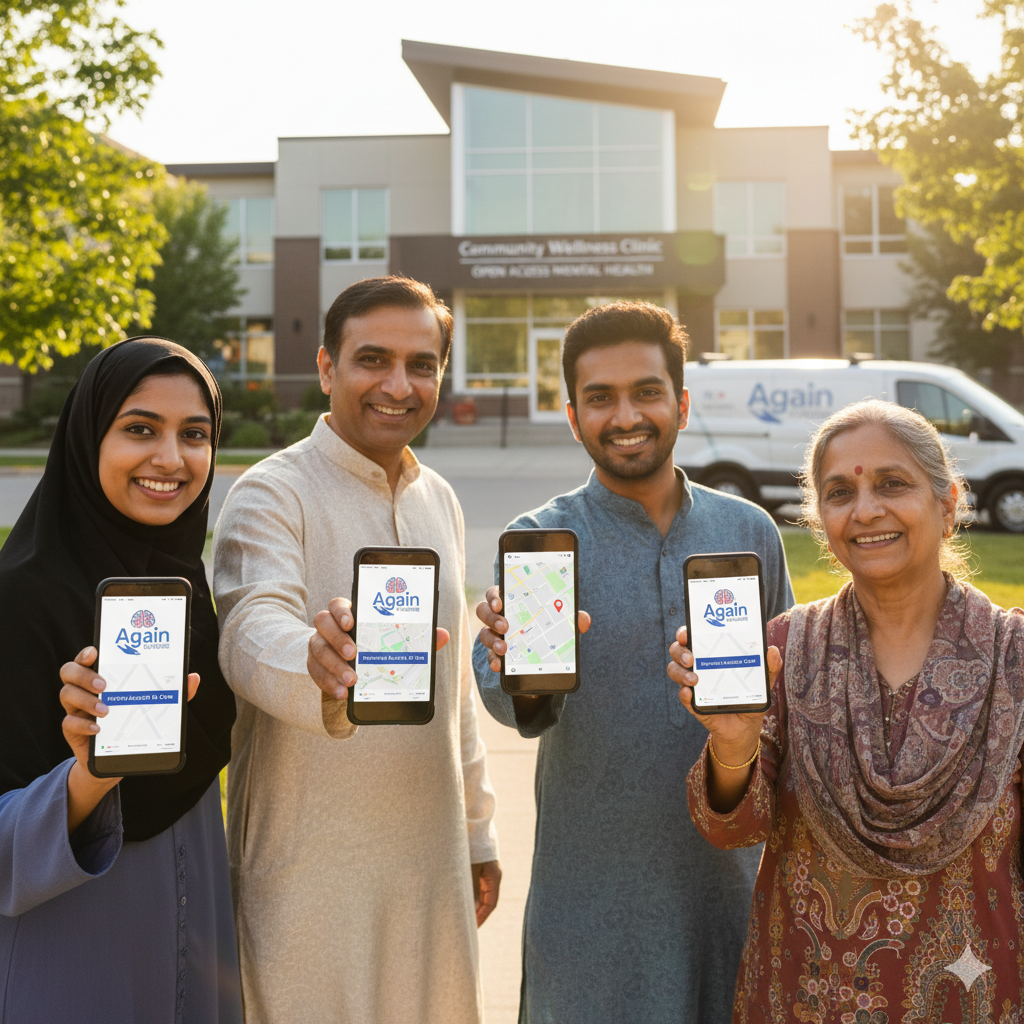
Deliver 12 monthly educational sessions and workshops to improve understanding of mental wellbeing, stress, and coping strategies.
target beneficiary: seniors and family caregivers
target activity: Mental health literacy workshops
Provide Peer Support
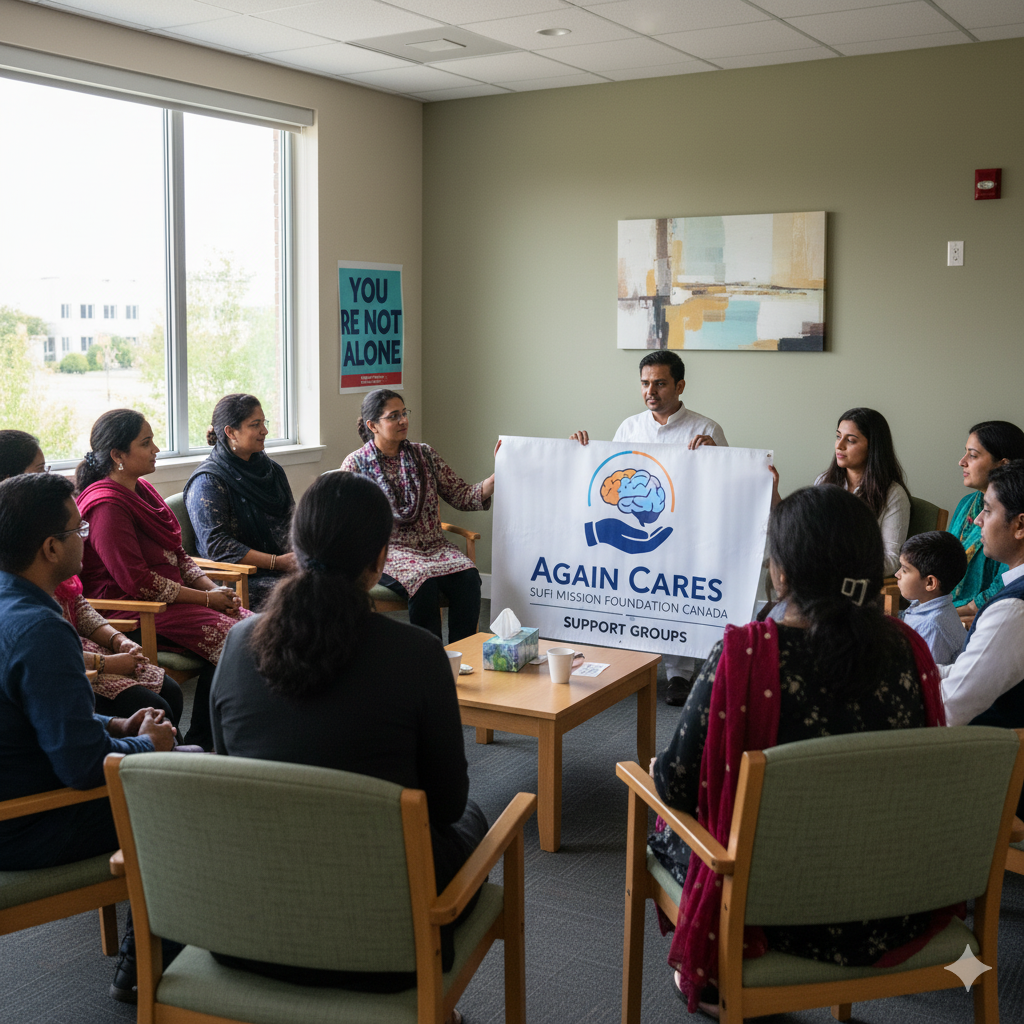
Establish a volunteer-led peer-support network trained in Mental Health First Aid. We believe in empowering our youth by encouraging them to partake in meaningful activities.
Target Beneficiary: Newcomer and Immigrant Families
Key Activities: Mental Health Literacy Workshops
Enhance access to care
Build referral pathways with local mental-health agencies and family doctors for early intervention and sustained care.
Target Beneficiary: Youth and Women experiencing stress and adjustment challenges
Key activities: mental health literacy workshops
Reduce Stigma
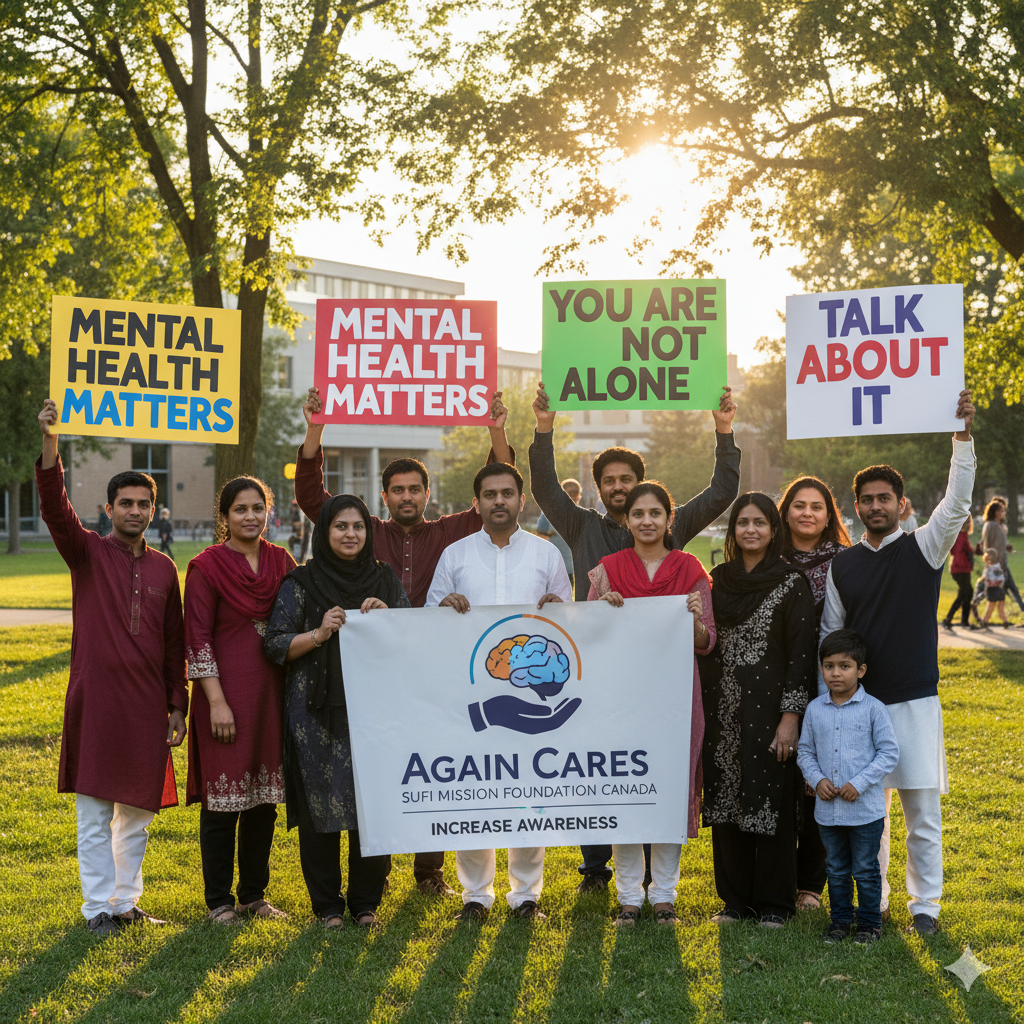
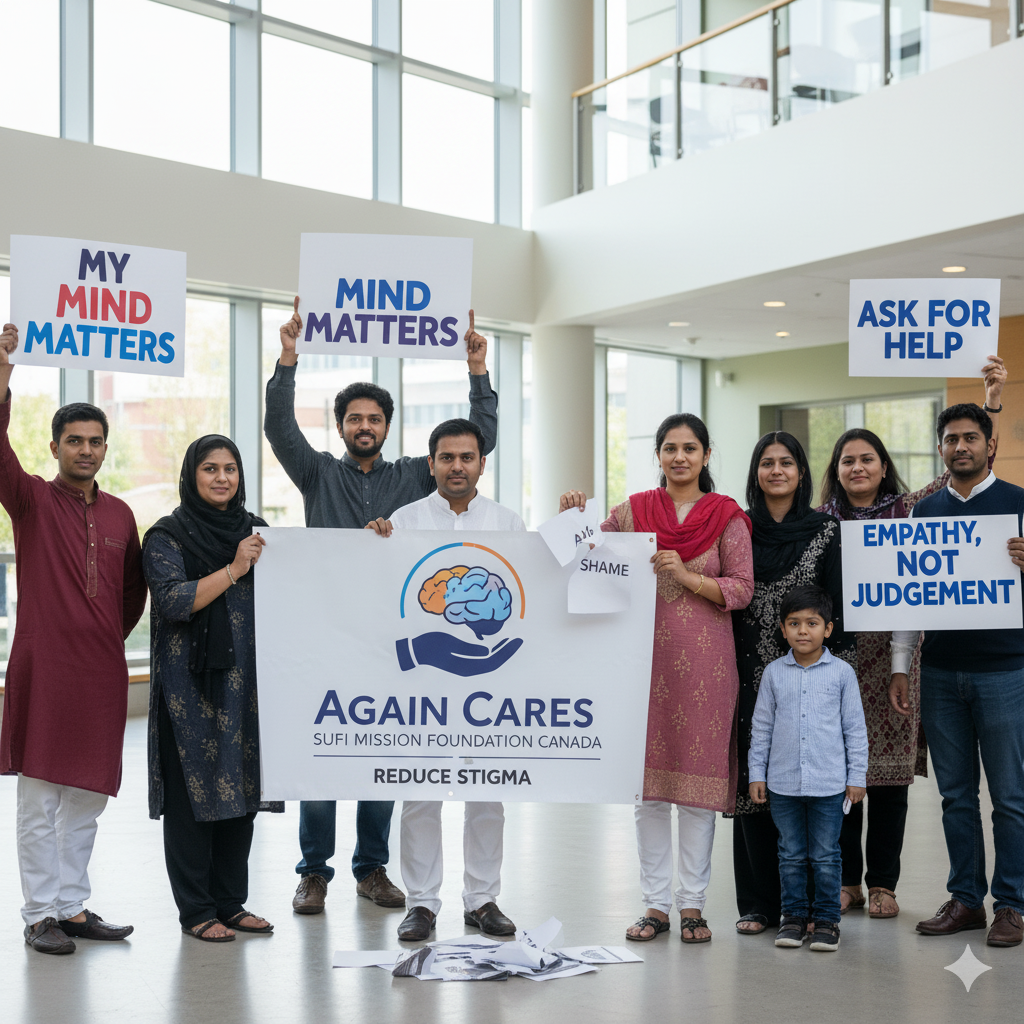
Foster open dialogue within diverse communities to normalize conversations around mental health.
Target Beneficiary: members of all Canadian communities
Key Activities: Training volunteers in “Mental Health First Aid Canada” certification
Understanding Islamic Psychology
Sufi Mission Foundation of Canada
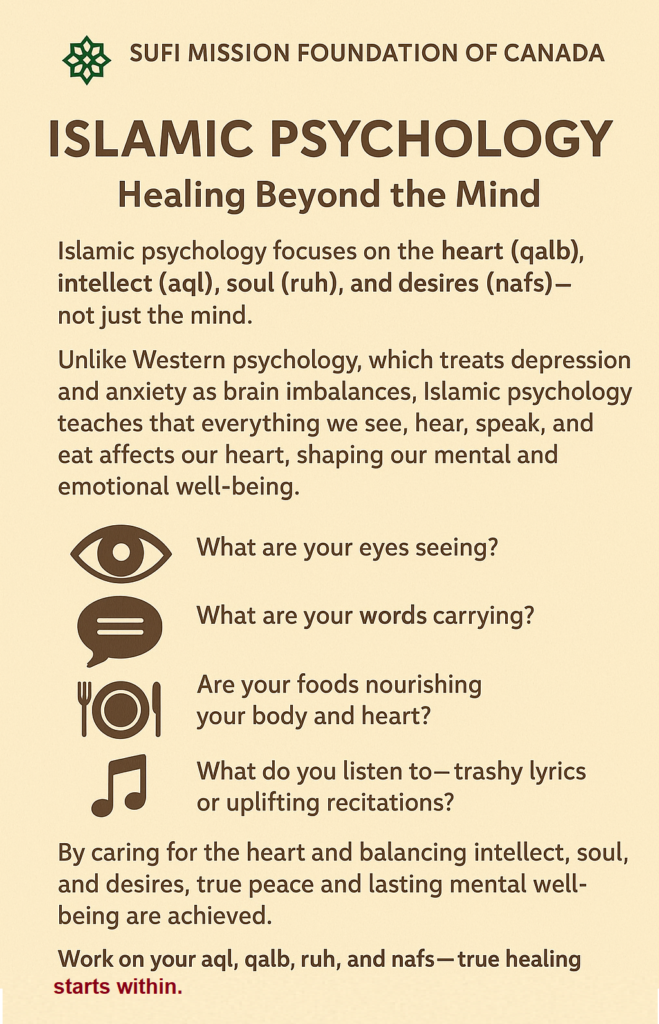
Islamic psychology explores the profound relationship between the aql (intellect), qalb (heart), ruh (soul), and nafs (desires). It emphasizes how these elements interact to shape our emotional, spiritual, and mental well-being.
Islamic Psychology vs. Western Psychology
Western psychology primarily focuses on the mind. It emphasizes concepts such as mindfulness, meditation, and neurochemical imbalances, treating conditions like depression or anxiety as purely mental or biological issues.
In contrast, Islamic psychology places the heart at the center. Everything we experience through our five senses—what we see, hear, speak, eat, and think—affects our heart. These heart influences, in turn, shape our mental and emotional state.
Sight: What are our eyes observing? Are we allowing them to wander freely, or are we mindful of what we see?
Speech: What do our words carry? Are we gossiping, lying, or speaking harshly, or are we using speech to spread goodness?
Food: Are we nourishing our bodies with wholesome, pure foods, or consuming items that negatively impact both body and heart?
Hearing: What do we listen to? Is it harmful music, gossip, or swearing—or is it the recitation of the Quran and uplifting, virtuous words?
These influences accumulate in the heart and affect our mental state, which explains the rise in depression and anxiety today. Many seek temporary relief by treating symptoms at the mind level, but true healing requires addressing the heart.
By nurturing the aql (intellect), qalb (heart), ruh (soul), and disciplining the nafs (desires), one can achieve lasting peace and emotional well-being. This holistic approach is the cornerstone of Islamic psychology, offering solutions that are not just temporary but permanent.
Reminder: True balance comes from consciously working on your intellect, heart, soul, and desires. Aligning these elements leads to spiritual, mental, and emotional harmony.